The Biggest Lessons I Learnt from Instructional Story Design by Rance Greene: How to Instruct - So People Act.
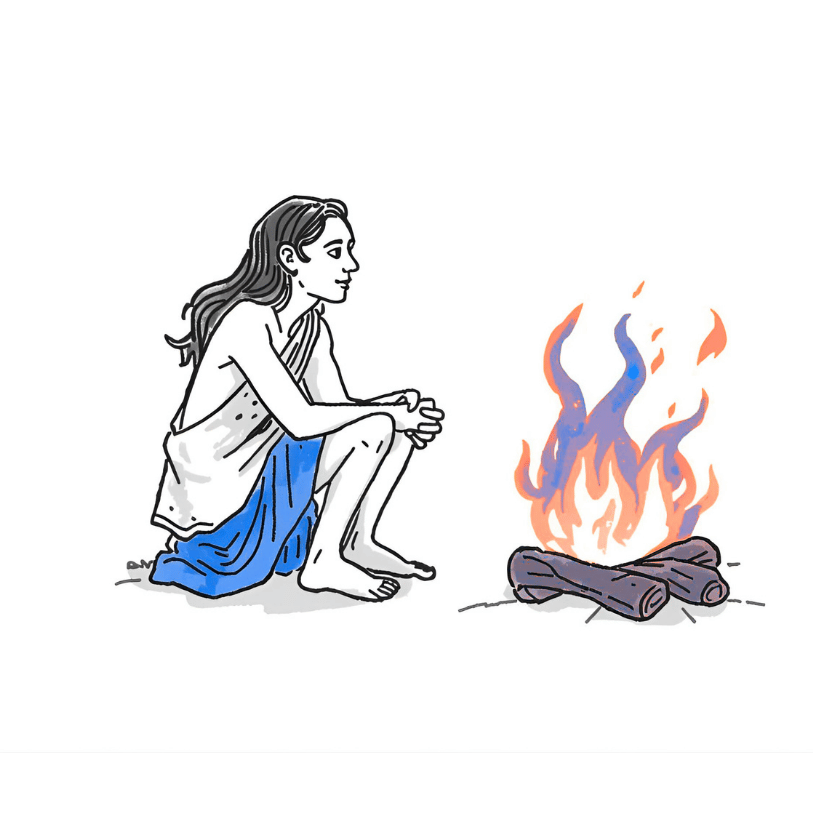
Prehistoric human intently listening to a story around a campfire
10 MINUTE READ
✨ Why Stories Stick: How Our Brains Are Wired for Narrative
Stories aren’t just entertainment—they make learning memorable and move people to action.
🧑🤝🧑 Know Your Learners: The Power of Analysis
Understanding your audience is the first step to designing stories that truly resonates.
🎯 Define the Desired Action: Clarity Before Creativity
Before you craft the story, be crystal clear on what you want learners to know, do or feel.
⚔️ Designing Conflict & Action: Where the Story Comes Alive
Learners engage most when faced with meaningful challenges and decisions.
🚀 Deliver, Train, and Evolve: From Story to Results
Bring your story to life, measure its impact, and keep refining for even better outcomes.
“Stories have been used for centuries as tools for passing on knowledge.”
✨ Why Stories Stick: How Our Brains Are Wired for Narrative
I could hardly believe it. Last period of the day, and my teenage class sat silent—hanging on every word. Not because of me (let’s be honest), but because of the story. A single wrong turn. A royal car. The fateful moment Archduke Franz Ferdinand was assassinated—an event that lit the fuse for the Great War, unleashing a chain reaction of catastrophe across the world.
I’d like to think they walked away with a deep grasp of the multiple intertwining, long-term causes of the war. Maybe. Maybe not. But one thing’s for sure—they could retell that story months later. Why? Because stories stick. So with that in mind, I turned to Rance Greene’s infamous book “Instructional Story Design” to see how it could be applied to corporate and educational training.
Why are stories so engaging? Evolutionarily speaking, we are wired to listen for a story.
From an evolutionary standpoint, our brains are wired for narrative.
As Greene explains, “Your mind knows the patterns of conflict and resolution. It puts you right in the middle of the action—you feel what the people feel. Then, after repeating the story, you recall details with accuracy.”
Yet, the moment we step into professional training, that instinct often vanishes. The result? Learners retain less of what they were trained to do.
Stories are actionable.
Dan Heath, in Made to Stick, puts it this way: “A story is powerful because it provides the context missing from abstract prose … more like a flight simulator. Being the audience for a story isn’t so passive, after all. Inside, we’re getting ready to act.”
Greene builds on this with an example: a flight simulator works because the learner is almost experiencing the task first-hand. Stories function the same way. MRI scans confirm this—when we hear a story, the same neurons fire as if we were performing the actions ourselves. In other words, stories don’t just inform us; they prepare us to act. And that, Greene argues, is the ultimate goal of training.
🧑🤝🧑 Know Your Learners: The Power of Analysis
“I’m not an author—how the heck am I supposed to write a gripping story?”
The good news: you don’t have to invent one. Like a journalist, your job is to uncover it. And the best place to start is learner analysis.
Stakeholders will share opinions about performance gaps, but those are rarely the whole story. Greene suggests going deeper—through surveys, focus groups, and interviews. These reveal what really matters: demographics, backgrounds, skills, fears, and motivations.
From there, you create a character (or characters) that embody these insights. Learners see themselves reflected in that character. The training stops being abstract. It becomes personal—something they care about and want to resolve.
🎯 Define the Desired Action: Clarity Before Creativity
What actually happens in the story? That depends on your learning goals.
👉 Want sales associates to sell more new products? Break down the sub-actions required.
👉 Want students to practice listening in a foreign language at home? Identify the steps and knowledge they need.
These answers shape the story’s actions and conflicts. The clearer the desired actions, the easier it is to design a story that drives learners toward them.
⚔️ Designing Conflict & Action: Where the Story Comes Alive
This is where the narrative takes shape. Greene emphasizes that the character should face the same challenges your learners encounter. As the character works through solutions, learners begin to see their own path forward.
The clearer the conflicts and actions, the more powerful the story becomes—and the stronger the connection between learning and real-world application.
🚀 Deliver, Train, and Evolve: From Story to Results
So when does the actual training happen?
Greene stresses that it doesn’t mean “starting from zero.” Instead, training builds on what staff already know. Respect their existing skills and knowledge.
From there, invite learners to share ideas, compare them with best practices, and test them against the challenges faced by the story’s character. Each obstacle becomes a point of discussion, debate, and decision-making.
In face-to-face settings, leaders can step in with feedback. Online, a learning platform might use branching scenarios or decision-based quizzes.
By the end, learners haven’t just heard about what to do—they’ve lived it through the story. That emotional connection makes the training memorable, actionable, and far more likely to transfer into real performance.
Interested to learn more? Check out his website.